

There’s a secret a lot of women share, but don’t discuss. We can be giggling with our girlfriends and share freely some of the most intimate details of our lives, yet be unable to speak about what is happening physically with our bodies.
During a cough, sneeze, laugh or even just a giggle, many of us have urinary leakage. It can be incredibly embarrassing, limit many of our physical and social activities (when was the last time you didn’t worry while jumping on a trampoline or belly-laughing with friends), yet we still never discuss it. Some of us quit running for exercise or make sure we wear a pad if we are going out somewhere and may be laughing a lot. Some of us know where every bathroom is in the mall or on the way home from work. But, most of us still just keep plugging along, spending all of our energy caring for our families and friends rather than addressing this issue that invades almost every aspect of our lives.

The fact is that this problem is widely accepted. Maybe it’s because it happened to our grandmothers, our mothers, sisters and friends. Maybe it’s because we joke anonymously about it on Facebook or other social media venues. In crowds, we can crack jokes about it without ever having a real conversation that might help us resolve it. I will never forget my 30-year-old friend telling me she leaks, but that she wasn’t worried about it because her mother and her grandmother both leaked.
There are many different reasons for urinary leakage, some serious and some quite simple to address. It is my hope to give you a few tools to improve urinary leakage immediately. If these things are not enough for you to address the problem yourself, you will gain the knowledge of where to find help!
Resolving the issue of urinary leakage can be a simple matter of gaining strength with exercise. Urinary leakage is incredibly common, but please don’t confuse this with normal. Conservative estimates show that 30-40% of middle-aged women have urinary leakage.3 According to the Centers for Disease Control, $19.5 billion was spent on addressing urinary leakage alone in 2000.1
5 Tips for Reducing Urinary Leakage
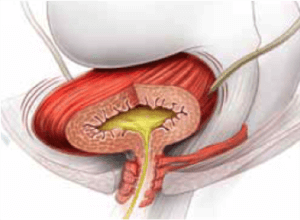
1. Stay Well-Hydrated
It’s counter-intuitive, but a dry bladder is an irritated bladder, and an irritated bladder can be a leaky bladder!
2. Keep it Clean
Eliminate bladder irritants. Caffeine, alcohol and artificial sweeteners tend to irritate the lining of the bladder and increase leakage.
3. Sit and Relax
Women often rush to the restroom, hurry to urinate and hover over the commode when doing so. This practice can contribute greatly to leakage because it trains your bladder that it is okay for it to squeeze until empty, in spite of your pelvic floor muscles (vaginal muscles) being contracted because you are hovering. This often prevents you from emptying the bladder completely, which makes you feel like you have to go again not long after you’ve used the restroom.
4. Strengthen Your Foundation
If your leakage is due to weakness of the pelvic floor muscles – which is NOT always the culprit – then a solid home program is in order. You can try this on your own or have a prescribed program from a physical therapist specializing in pelvic floor rehabilitation. Strengthening the muscles involves contracting the vaginal muscles by pulling them up and inside of the pelvis. You can use a finger to monitor the movement, a mirror or if you have a solid sense of movement (kinesthetic sense), you can sit in a chair and feel the pelvic floor lift up and away from the seat.
There are many simple, easy-to-use tools to help you monitor your pelvic floor strengthening program. It should NOT be painful EVER! If your exercises are causing pain, or if you started with vaginal pain, please consult your physical therapist who specializes in pelvic floor rehab. Normal strength for the pelvic floor muscles is considered being able to hold a full (very strong) contraction for 10 seconds and perform this for 10 repetitions.
The pelvic floor muscles are striated, just like your quadriceps and your biceps muscles. This means they can get stronger and they can get weaker. You have the ability to train them and improve their coordination. The trouble is that you can’t see them! Visualization or feedback is often helpful. In the clinic, biofeedback is very effective in letting you visualize the muscles.2 It’s simple and not painful.
Other tools to help strengthen are the pelvic floor educator, Pericoach and vaginal weights. Some programs, like weights, do require you to already have a strong pelvic floor.
5. Turn to Technology
Our favorite app to help with bladder control is Kegel Kat. It’s a fun, free and easy way to remember to do your exercises and strengthen your pelvic floor.
As women, we often put ourselves last on the list of things to do. I always tell patients, “If you don’t take care of yourself, you can’t take care of anyone else.” You are the only person who can take care of your health.
You don’t have to suffer from urinary leakage. If you are having leakage because of muscle weakness, you can try the above listed strategies; but, if they are not enough to resolve your symptoms, you can have an evaluation with a urogynecologist, or a physical therapist who specializes in pelvic floor rehab.
There are lots of resources available to you online, and many reasons for urinary leakage can be addressed without surgery. Be good to yourself, explore your options and don’t accept leakage as a standard of living!
Sources:
- “Prevalence of Incontinence Among Older Adults”, Gorina, et al, Vital Health and Statistics, Series 3, Number 36, June 2014, Centers for Disease Control
- National Institute on Aging website: Health and Aging, AgePage, Urinary Incontinence https://www.nia.nih.gov/health/publication/urinary-incontinence
- “The Prevalence of Urinary Incontinence”, Nitti, V., Rev Urol. 2001; 3(Suppl 1): S2–S6.
I’m so glad it was helpful! Thanks for the nice words!